Garden-Style Communities
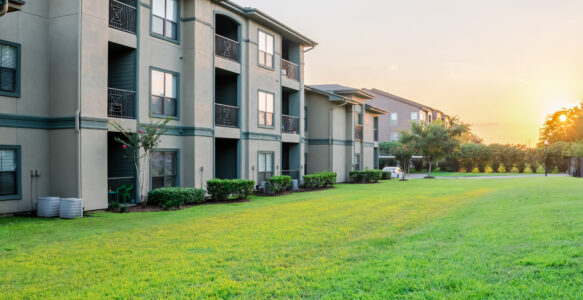
With long-term institutional investment data pointing to consistently attractive results with garden-style apartments across multiple market cycles, these communities are beginning to get a closer look from more investors.
With long-term institutional investment data pointing to consistently attractive results with garden-style apartments across multiple market cycles, these communities are beginning to get a closer look from more investors.
Insurance costs have long been one factor in evaluating development sites and land uses, but rising climate risk and growing instability in insurance markets have elevated them into a front-end site selection and underwriting consideration.
Commercial real estate investment activity remains well below the highs of the previous cycle, and capital markets conditions continue to challenge both buyers and sellers. Elevated borrowing costs, refinancing pressure, uneven property fundamentals and continued pricing uncertainty have kept many investors on the sidelines.
A submarket-by-submarket look at Office, Industrial, Retail, Multifamily, and Land in the Missoula market from Coldwell Banker Commercial Drew Ward Warne, August 2026.
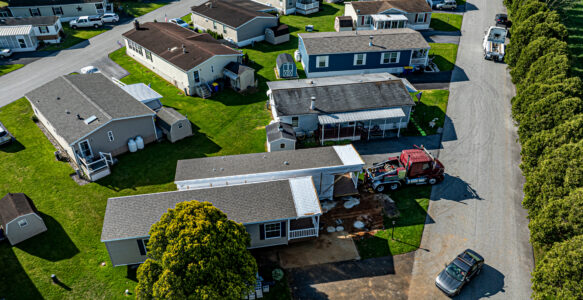
For years, manufactured housing has been treated as a side conversation in American real estate. It’s too often reduced to outdated stereotypes, too rarely understood as a modern housing product, and almost never discussed with the urgency the affordability crisis now demands. That posture no longer fits the facts.
Manufactured housing is not a silver bullet. But it is one of the few scalable forms of unsubsidized homeownership still available at a price many households can realistically reach.
For decades, commercial real estate leases followed a fairly predictable formula. Landlords sought long-term commitments that provided stable income, while tenants prioritized securing the space they needed to support future growth. Those priorities have not disappeared, but the leasing conversation has become more nuanced.
Today, many occupiers are looking beyond rent and square footage and placing greater emphasis on flexibility. In some cases, that means shorter lease terms. In others, it means negotiating options that provide room to adapt as business needs change.
Demand for smaller and more flexible spaces is growing across office, retail, and industrial properties as occupiers prioritize adaptability in an increasingly dynamic business environment.
A look at the construction and development projects that have been applied for this year in Helena Montana.
Growth, Constraint, and Where Value Moves Next in the Helena Metropolitan Statistical Area.
Investor priorities appear to be shifting. This shift is encouraging because it validates the type of market where CBC professionals are often strongest: locally informed, relationship-driven, mid-market real estate.
The overall U.S. commercial real estate recovery that began in 2025 accelerated early in 2026, with stronger capital flows, improved lending conditions and more active market participants. Transaction volume rose 19% year-over-year to $117 billion in 1Q26. Despite this momentum, the market remains highly bifurcated, with performance driven more by property fundamentals and local market conditions than broad macro trends. While activity has been resilient – as investors grow tired of waiting for a market correction – growth is uneven and concentrated in markets benefiting from job creation, population inflows, space needs, and structural changes in demand.