Mid-Market Real Estate
Investor priorities appear to be shifting. This shift is encouraging because it validates the type of market where CBC professionals are often strongest: locally informed, relationship-driven, mid-market real estate.
Investor priorities appear to be shifting. This shift is encouraging because it validates the type of market where CBC professionals are often strongest: locally informed, relationship-driven, mid-market real estate.
The overall U.S. commercial real estate recovery that began in 2025 accelerated early in 2026, with stronger capital flows, improved lending conditions and more active market participants. Transaction volume rose 19% year-over-year to $117 billion in 1Q26. Despite this momentum, the market remains highly bifurcated, with performance driven more by property fundamentals and local market conditions than broad macro trends. While activity has been resilient – as investors grow tired of waiting for a market correction – growth is uneven and concentrated in markets benefiting from job creation, population inflows, space needs, and structural changes in demand.
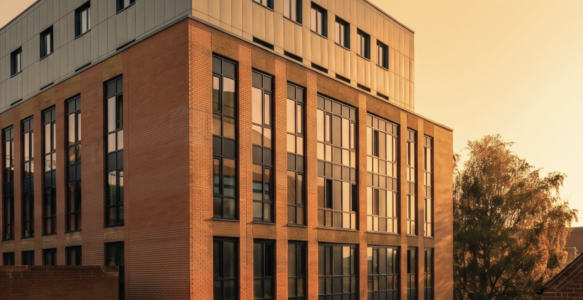
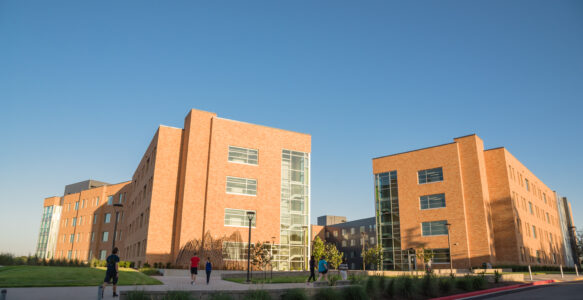
Student housing still looks like one of the steadiest corners of commercial real estate. Yardi Matrix reports that preleasing for the 2026-2027 academic year reached 52.3% in January, ahead of an estimated 45.6% a year earlier. Across 184 universities, total fall 2025 enrollment reached 4.9 million students, up 1.8% year over year. For investors looking for durable demand, those are the kind of numbers that keep the sector near the top of the watch list.
The office market is often described as either recovering or collapsing. The data increasingly suggests neither explanation fully captures what is happening. Office usage is rising again, but not evenly. Simultaneously, new office construction has slowed to a near standstill. Together, those two forces are reshaping how the office market will evolve over the rest of the decade. The result may not be a traditional recovery cycle. It may be a reorganization of the office market itself.
For years, shopping malls felt like a fading part of the retail landscape, shaped by store closures, declining foot traffic, and the steady rise of e-commerce. But in 2026, that narrative is starting to shift. Malls are not just recovering, they are being rethought around how people actually want to spend their time.
Financial pressure on farm operators is creating a rare window for institutional capital to enter one of the country’s largest and most fragmented land markets.
This Market Tales × WCBC special, recorded live at CBC Global Conference 2026, features Kelsey Ward in conversation with Ashley Wilson on agility, influence, and next-gen CRE leadership — plus an exclusive Women of CBC lightning round with Jenna Hille. Kelsey’s path from architect to broker is anything but linear — she brings a rare design-meets-dealmaker perspective to creative financing, adaptive reuse, and what it means to build a career and a reputation at the same time in commercial real estate.
Artificial intelligence has pushed data centers to the center of the commercial real estate conversation. Capital continues flowing into digital infrastructure as cloud providers and technology firms race to expand computing capacity. Development pipelines are growing across major markets, and investors increasingly treat the sector as one of the most attractive areas of institutional real estate.
For decades, office leasing decisions followed a familiar checklist: location, rent, amenities and layout. Today another factor increasingly sits near the top of that list: capital stability.
Corporate expansion decisions leave a visible footprint. When companies build manufacturing plants, logistics hubs, data centers or office campuses, they are making long-term bets on labor markets, infrastructure, operating costs and regulatory environments. Taken together, those decisions form one of the clearest indicators of where commercial real estate demand will emerge next.